Research Guide

Disclaimer: Educational information only, not medical advice or validated dosing instructions. Amanita species can cause serious poisoning. Clinical effectiveness and a safe dose are not established by this guide. Seek qualified medical care; contact emergency services or a poison centre if poisoning is suspected. Independently verify current local law.

Research Monograph — Version 2.1

Ethnopharmacology
& Therapeutic Potential

Amanita muscaria, A. regalis & A. pantherina

An educational exploration of the ethnobotany and chemistry of Amanita muscaria, A. regalis, and A. pantherina. Includes evidence limitations and poisoning warnings — not validated treatment or dosing instructions.

Educational editorial guideBibliographic check: October 2026Clinical safety is not established

Abstract

This educational guide discusses Amanita muscaria, A. regalis, and A. pantherina, chemical studies and poisoning reports. Primary analytical evidence documents muscimol and ibotenic acid in sampled A. muscaria and A. pantherina; a primary case report documents A. regalis poisoning. Laboratory findings do not establish a clinically effective or safe mushroom treatment.

Bibliographic check: 12 October 2026. Retained composition figures are explicitly study-specific; unverified storage figures, dose schedules and treatment claims have been withdrawn. This check is not independent scientific or medical expert review. References state what was accessible and what each source can support.

Amanita muscariamuscimolmicrodosingGABA receptorssleepaddictionneuroplasticity
Section 1

Introduction

Reports of historical or recreational mushroom use are not proof of a treatment. This guide does not assert a verified history of medical benefit or compare legal status across countries.

Experimental receptor research (Benkherouf et al., 2019) supports muscimol activity at GABA-A receptors. Mechanistic evidence must not be used to infer mushroom efficacy, tolerability or a safe oral dose.

Claims of sleep, mood or withdrawal benefits require independent clinical evidence. Anecdotes and general neuroscience publications do not establish those benefits or an absence of side effects.

This guide does not establish safe protocols. Historical use and receptor mechanisms must not be confused with clinical evidence; independent toxicology and medical review are needed.

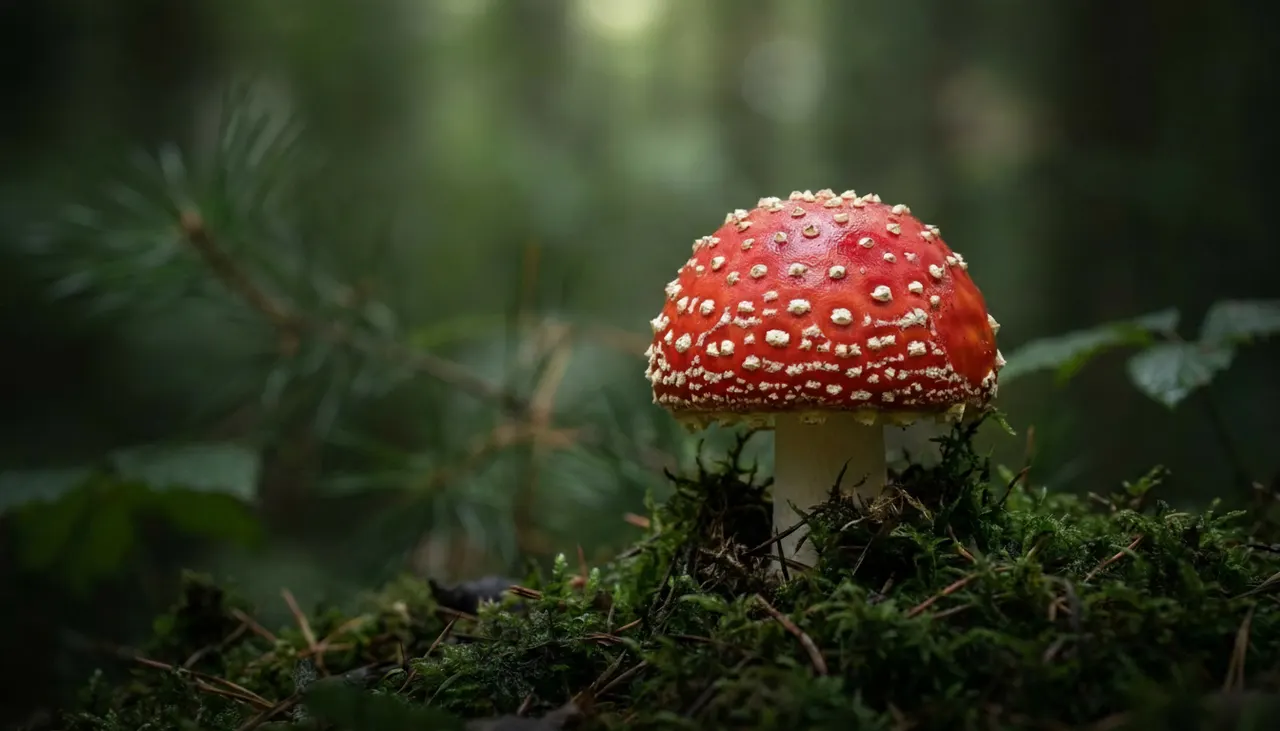
Amanita muscaria in natural habitat
Section 2

The Trinity of Amanita: Comparative Species Analysis

The cards distinguish primary analytical evidence from poisoning reports. They do not rank species by therapeutic suitability or claim predictable pharmacological signatures.

Muscaria

Amanita muscaria

Ibotenic acid and muscimol were measured in marketed dried specimens. Individual sample results do not define a safe dose or a predictable effect.

Primary chemical analysis (2006)

Regalis

Amanita regalis

A primary case report documents poisoning after mistaken identification. The earlier concentration ranges and claim of a more stable relaxing effect could not be verified.

Primary poisoning report (1979)

Pantherina

Amanita pantherina

Muscimol and ibotenic acid were measured in marketed dried specimens. A small sample cannot establish a universal potency multiplier relative to Muscaria.

Primary chemical analysis (2006)

No beginner/expert suitability, duration, dose equivalence or species-wide concentration range is established by these cards. See the study-specific composition table below.

2.1

Muscaria: Chemical Evidence and Poisoning Risk

Tsujikawa et al. (2006) identified marketed dried A. muscaria specimens by macroscopic and microscopic examination and measured ibotenic acid and muscimol. The chemistry table reports those samples only, not an expected composition for every specimen.

Oda et al. (2004) found geographic genetic structure within mushrooms identified as A. muscaria and A. pantherina. A short visual description or illustration is not an identification key; this guide does not authenticate specimens.

Poisoning risk

Moss & Hendrickson (2019; online 2018) documented gastrointestinal symptoms, CNS excitation and CNS depression after mushroom ingestion, including cases requiring intubation. These selected cases cannot establish a safe dose, typical effect duration or a potency-based species substitution.

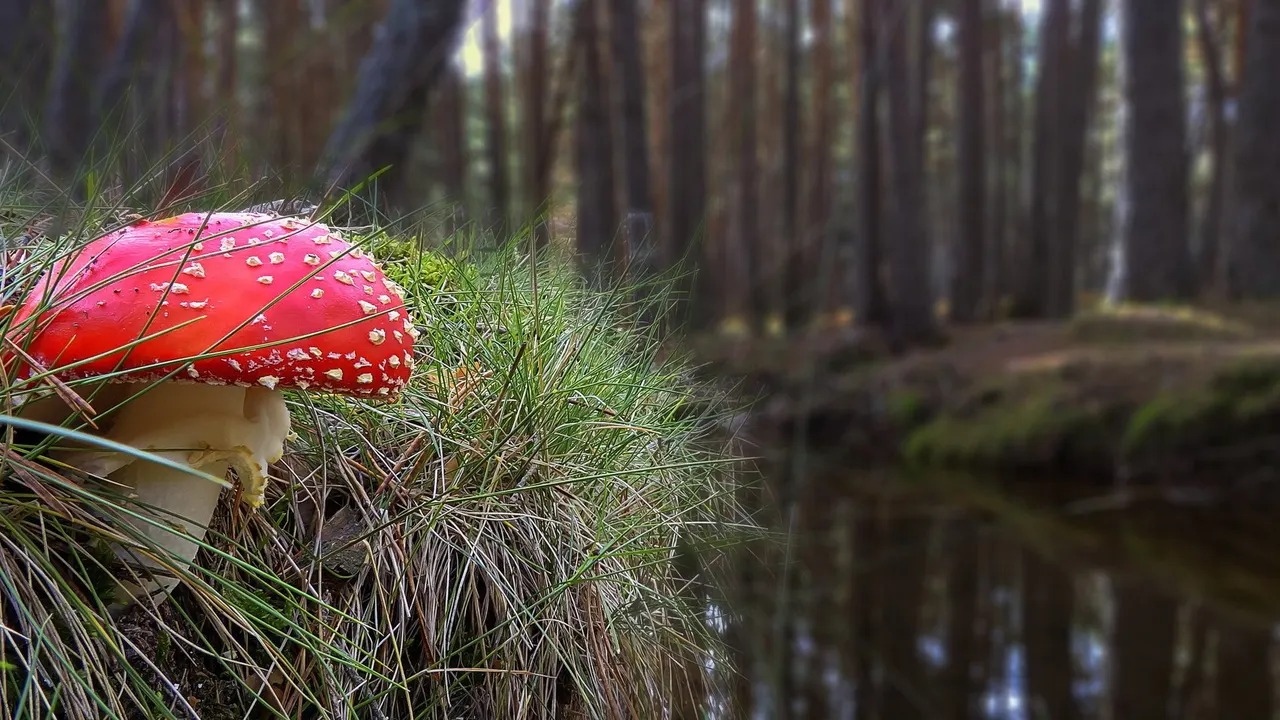
Amanita muscaria — red fly agaric
2.2

Regalis: Poisoning Report and Evidence Gaps

Elonen et al. (1979) reported poisoning in three people who mistook A. regalis for an edible parasol mushroom. Gastrointestinal symptoms and, in two patients, neurological manifestations were reported. This case report is not evidence of a predictable relaxant effect.

No primary analytical source was verified for the former Regalis concentration ranges. They have been removed, together with the claim that this species is more stable or better suited for evening use.

2.3

Pantherina: Sample Results Are Not Dose Equivalents

Tsujikawa et al. (2006) identified marketed dried A. pantherina specimens by macroscopic and microscopic examination and measured ibotenic acid and muscimol. The chemistry table reports those samples only, not an expected composition for every specimen.

Oda et al. (2004) found geographic genetic structure within mushrooms identified as A. muscaria and A. pantherina. A short visual description or illustration is not an identification key; this guide does not authenticate specimens.

Poisoning risk

Moss & Hendrickson (2019; online 2018) documented gastrointestinal symptoms, CNS excitation and CNS depression after mushroom ingestion, including cases requiring intubation. These selected cases cannot establish a safe dose, typical effect duration or a potency-based species substitution.

Section 3

Chemical Composition & Pharmacodynamics

3.1

Mechanisms: experimental evidence, not clinical benefit

Muscimol acts as a GABA-A receptor agonist. Benkherouf et al. (2019) studied receptor binding and responses in mouse brain membranes and recombinant receptors. These experiments do not establish human mushroom pharmacokinetics, sleep improvement or antidepressant effects.

Ibotenic acid has excitatory glutamate-receptor activity. Zinkand et al. (1992) examined NMDA-mediated neurotoxicity and metabotropic receptor signalling in experimental systems. This does not quantify neurotoxicity from a particular oral mushroom dose.

Tsunoda et al. (1993) describe conversion of ibotenic acid to muscimol by decarboxylation during processing. Drying does not demonstrate detoxification.

Earlier human half-life, peak-blood-time, liver-metabolism, DMN, parasympathetic and secondary-component health-benefit claims were not verified and have been removed. No species-wide ergosterol or potassium concentrations are asserted.

3.2

Study-specific composition

Tsujikawa et al. (2006), DOI: 10.1016/j.forsciint.2006.01.004: the publisher abstract reports the following concentrations in caps from marketed dried samples in Japan. Five A. muscaria and two A. pantherina samples were examined; A. regalis was not studied.

Reported cap results from one small study — not product specifications

Swipe to explore data →

Analyte (ppm, as reported)A. muscaria (5 samples)A. pantherina (2 samples)
Muscimol46–10521554–1880
Ibotenic acid (as hydrate)<10–2845188–269

For a mass fraction, 1 ppm = 1 mg/kg. The samples were sold dried; the accessible abstract does not establish a moisture-corrected dry-matter basis, so these figures are not relabelled as such. “<10” is a below-calibration report, not zero. The ibotenic-acid hydrate reporting convention matters when comparing assays.

The abstract and publisher previews, not the full analytical tables, were checked. These ranges are sample minima and maxima, not confidence intervals, safe levels, universal species ratios or a basis for a dose conversion.

Section 4

Processing and Storage: Evidence Limitations

The sections below summarize a primary processing study, not a preservation protocol. Unsupported temperatures, moisture targets, degradation percentages and expiry promises have been removed. Storage and processing do not establish a safe food product or a clinical treatment.

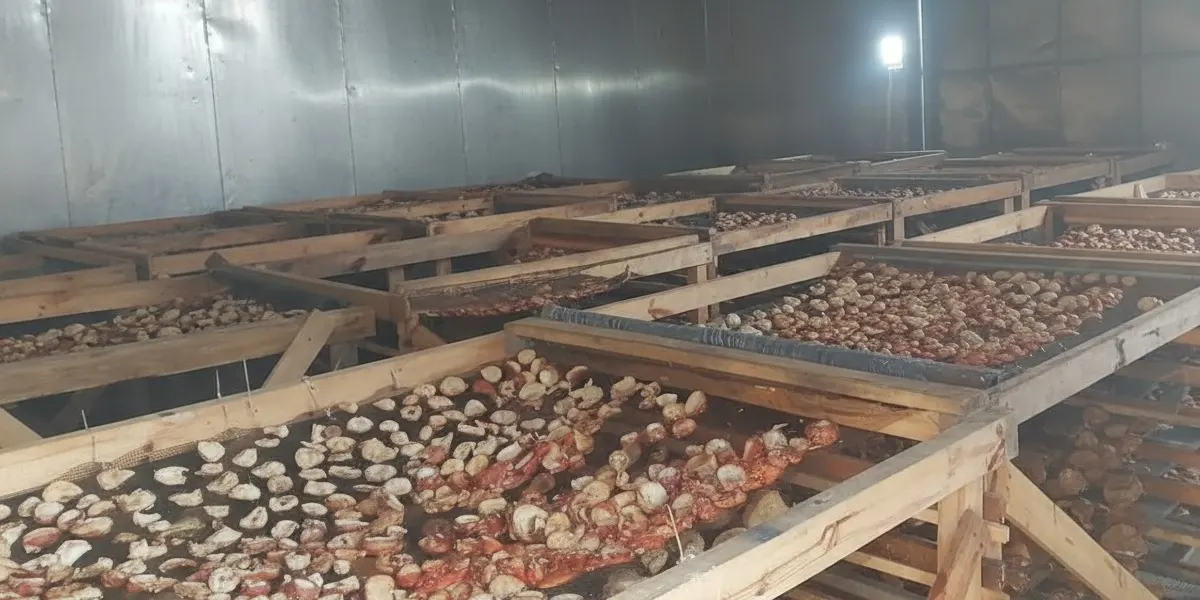
Illustration of drying equipment, not a validated Amanita processing method

Illustrative image — not experimental documentation or preparation instructions.

4.1

Drying Changes Chemistry, Not Proven Safety

Tsunoda et al. (1993), DOI: 10.3358/shokueishi.34.153 found that sun or heater drying increased muscimol while ibotenic acid was lost. The authors cautioned that processing could intensify toxicity. The abstract also reports that ordinary cooking did not reliably remove the toxic constituents.

This qualitative finding is not a validated home-processing method. The former temperature/time recipes, moisture targets, vacuum-drying superiority claim and “muscimol degrades above 50 °C” rule were not verified and have been withdrawn.

Processing is not proof of safety

Changing the balance of active compounds does not establish a safe food or dose. This guide does not supply drying, cooking or detoxification instructions for consumption.

4.2

Moisture: Validation Required

No verified Amanita-specific desiccant quantity, replacement interval or moisture acceptance target was found for the former recommendations.

Tsunoda et al. (1993) report that ibotenic acid and muscimol were stable under the dry or salt-storage conditions they studied. The accessible abstract does not justify a general expiry period, packaging specification, annual loss rate or extrapolation to all three species.

Shelf-life claims require a product-specific stability study covering analytes, packaging, humidity, temperature, light exposure and microbiological quality. This is a question for a qualified analytical laboratory, not a consumption-preservation guarantee.

4.3

Light Exposure: Evidence Gap

No verified Amanita-specific muscimol photodegradation rate or universal UV-blocking percentage for jars was found for the former recommendations.

Tsunoda et al. (1993) report that ibotenic acid and muscimol were stable under the dry or salt-storage conditions they studied. The accessible abstract does not justify a general expiry period, packaging specification, annual loss rate or extrapolation to all three species.

Shelf-life claims require a product-specific stability study covering analytes, packaging, humidity, temperature, light exposure and microbiological quality. This is a question for a qualified analytical laboratory, not a consumption-preservation guarantee.

4.4

No General Shelf Life Established

The former shelf-life and activity-loss table was not supported by a verified primary stability study and has been removed. Freezing does not establish an unlimited shelf life.

Tsunoda et al. (1993) report that ibotenic acid and muscimol were stable under the dry or salt-storage conditions they studied. The accessible abstract does not justify a general expiry period, packaging specification, annual loss rate or extrapolation to all three species.

Shelf-life claims require a product-specific stability study covering analytes, packaging, humidity, temperature, light exposure and microbiological quality. This is a question for a qualified analytical laboratory, not a consumption-preservation guarantee.

4.5

Contaminant Analysis Does Not Prove Food Safety

Heavy metals: laboratory reporting, not safety certification

The former EU/US numerical limits have been removed: no applicable Amanita product category was established. The following is an illustrative reporting checklist, not measured batch data or legal acceptance criteria.

Illustrative laboratory checklist — no batch results

Swipe to explore data →

AnalyteInformation to request
Lead and cadmiumMeasured mass fraction, units, sample basis and uncertainty
ArsenicTotal arsenic; identify whether inorganic arsenic speciation is needed
MercuryTotal mercury; identify whether species-specific analysis is needed

FDA Elemental Analysis Manual, section 4.7 describes microwave-assisted digestion and ICP-MS for elemental analysis of food. This is a method reference, not validation for every Amanita matrix or a safety threshold. Total elemental measurements do not by themselves identify chemical species.

A report should identify the sampled lot, laboratory, method, recovery, detection and quantification limits, uncertainty, and wet/as-received/dry-matter basis. “Not detected” is not synonymous with zero. A contaminant result alone cannot establish safe consumption.

Section 5

Therapeutic Hypotheses: Not Validated Treatments

Experimental GABA-A receptor evidence does not establish clinical efficacy or safe mushroom use. The treatment sections below remain withdrawn.

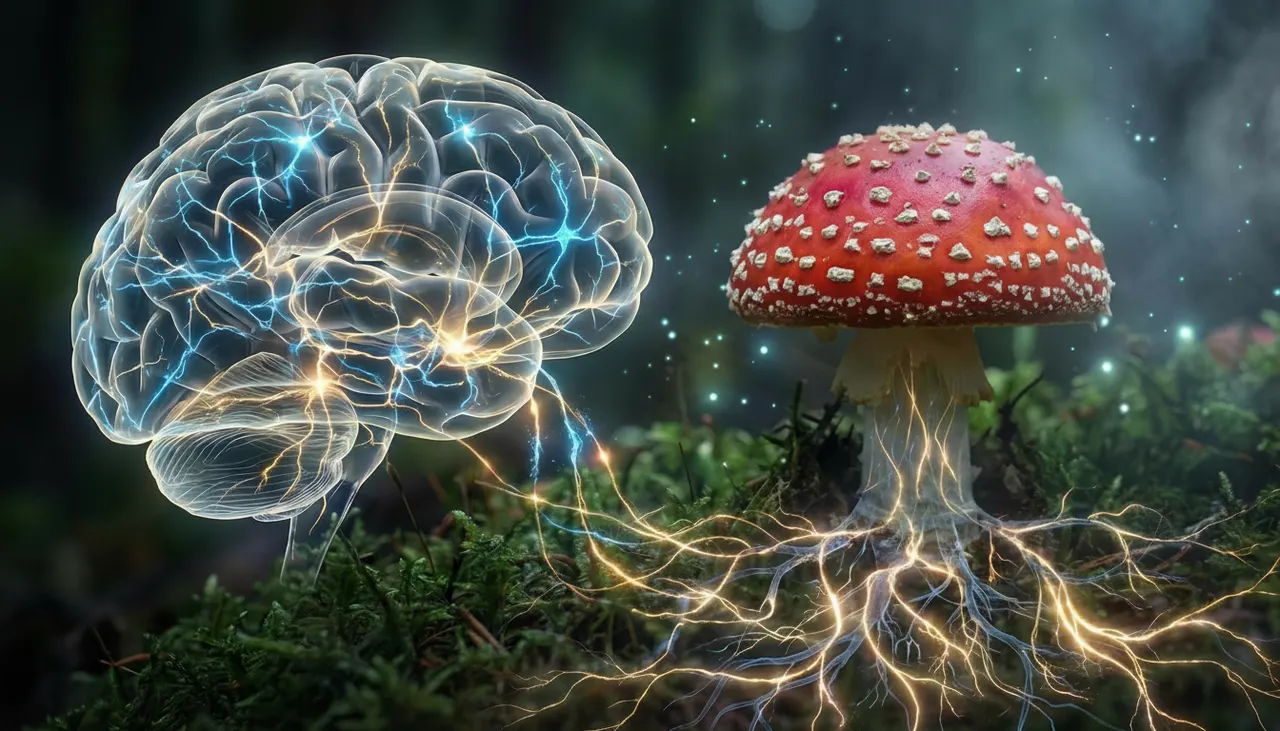
Conceptual neuroscience illustration, not measured muscimol effects

Conceptual illustration — not receptor data or clinical evidence.

Sleep research: evidence limitations

Earlier quantitative claims and recommendations in this section have been withdrawn because their supporting sources could not be verified. They must not be used to guide consumption, treatment or sales.

  • Amanita products can cause poisoning. A laboratory mechanism is not proof of a safe or effective treatment.
  • No safe dose, species substitution, microdosing schedule or supplement combination is established by this guide.
  • Do not replace prescribed care or attempt to manage withdrawal using this guide. Discuss treatment with a qualified clinician.
  • If poisoning is suspected, contact emergency services or a local poison centre. Do not wait for a website diagnosis.

Walker & Stickgold (2006; online 2005) is a general sleep and memory review, not an Amanita trial. These sources do not support the withdrawn treatment claims.

FDA safety notice, 18 December 2024: Amanita muscaria, its extracts and certain constituents are not authorized as ingredients in conventional food in the United States. This is a US food-use determination, not a blanket statement about possession or every jurisdiction.

Addiction: seek qualified treatment

Earlier quantitative claims and recommendations in this section have been withdrawn because their supporting sources could not be verified. They must not be used to guide consumption, treatment or sales.

  • Amanita products can cause poisoning. A laboratory mechanism is not proof of a safe or effective treatment.
  • No safe dose, species substitution, microdosing schedule or supplement combination is established by this guide.
  • Do not replace prescribed care or attempt to manage withdrawal using this guide. Discuss treatment with a qualified clinician.
  • If poisoning is suspected, contact emergency services or a local poison centre. Do not wait for a website diagnosis.

FDA safety notice, 18 December 2024: Amanita muscaria, its extracts and certain constituents are not authorized as ingredients in conventional food in the United States. This is a US food-use determination, not a blanket statement about possession or every jurisdiction.

Depression: seek qualified care

Earlier quantitative claims and recommendations in this section have been withdrawn because their supporting sources could not be verified. They must not be used to guide consumption, treatment or sales.

  • Amanita products can cause poisoning. A laboratory mechanism is not proof of a safe or effective treatment.
  • No safe dose, species substitution, microdosing schedule or supplement combination is established by this guide.
  • Do not replace prescribed care or attempt to manage withdrawal using this guide. Discuss treatment with a qualified clinician.
  • If poisoning is suspected, contact emergency services or a local poison centre. Do not wait for a website diagnosis.

Raichle et al. (2001) describes baseline brain function, not muscimol treatment or depression outcomes. These sources do not support the withdrawn treatment claims.

FDA safety notice, 18 December 2024: Amanita muscaria, its extracts and certain constituents are not authorized as ingredients in conventional food in the United States. This is a US food-use determination, not a blanket statement about possession or every jurisdiction.

Section 6

Microdosing: Uncertainty and Risks

No safe dose or validated intake schedule is established by this guide. Measurement accuracy does not resolve uncertain composition or poisoning risk.

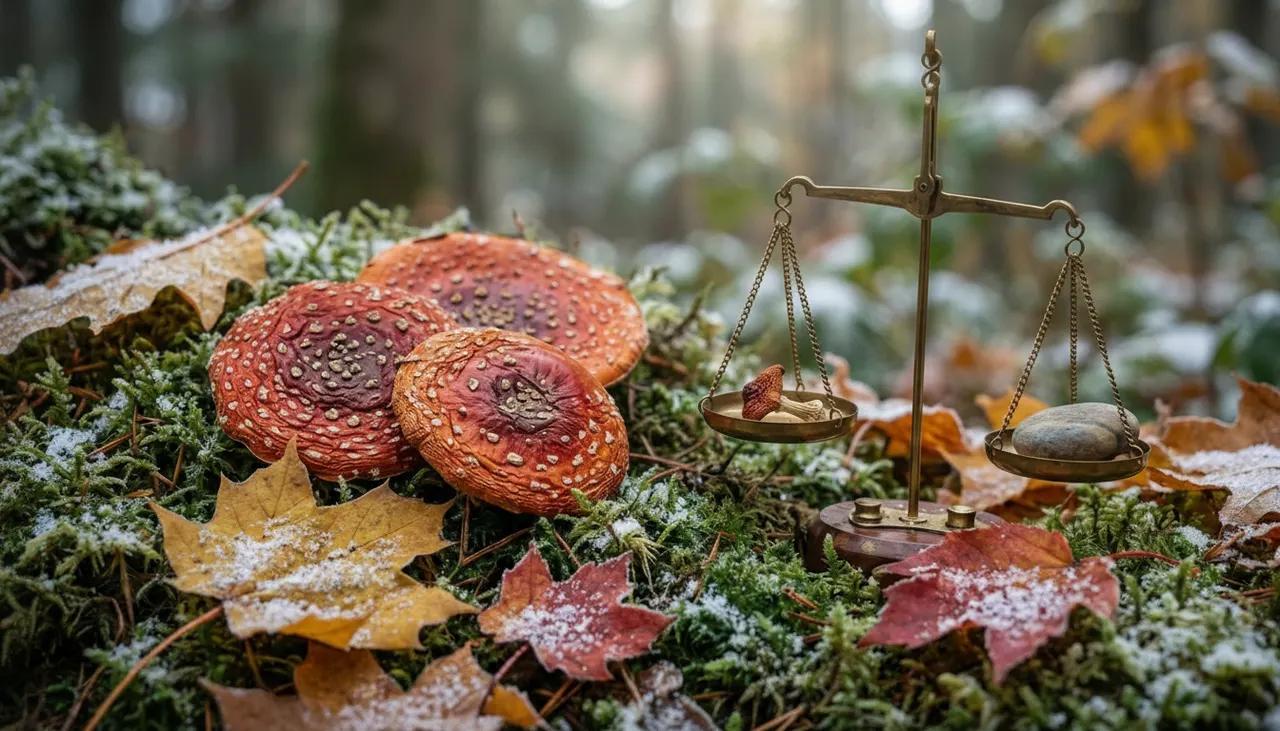
Laboratory scales illustrating measurement, not a dose recommendation

No established safe dose

Earlier quantitative claims and recommendations in this section have been withdrawn because their supporting sources could not be verified. They must not be used to guide consumption, treatment or sales.

  • Amanita products can cause poisoning. A laboratory mechanism is not proof of a safe or effective treatment.
  • No safe dose, species substitution, microdosing schedule or supplement combination is established by this guide.
  • Do not replace prescribed care or attempt to manage withdrawal using this guide. Discuss treatment with a qualified clinician.
  • If poisoning is suspected, contact emergency services or a local poison centre. Do not wait for a website diagnosis.

FDA safety notice, 18 December 2024: Amanita muscaria, its extracts and certain constituents are not authorized as ingredients in conventional food in the United States. This is a US food-use determination, not a blanket statement about possession or every jurisdiction.

Microdosing schedules are not validated treatments

Earlier quantitative claims and recommendations in this section have been withdrawn because their supporting sources could not be verified. They must not be used to guide consumption, treatment or sales.

  • Amanita products can cause poisoning. A laboratory mechanism is not proof of a safe or effective treatment.
  • No safe dose, species substitution, microdosing schedule or supplement combination is established by this guide.
  • Do not replace prescribed care or attempt to manage withdrawal using this guide. Discuss treatment with a qualified clinician.
  • If poisoning is suspected, contact emergency services or a local poison centre. Do not wait for a website diagnosis.

FDA safety notice, 18 December 2024: Amanita muscaria, its extracts and certain constituents are not authorized as ingredients in conventional food in the United States. This is a US food-use determination, not a blanket statement about possession or every jurisdiction.

Interactions and poisoning risks

Earlier quantitative claims and recommendations in this section have been withdrawn because their supporting sources could not be verified. They must not be used to guide consumption, treatment or sales.

  • Amanita products can cause poisoning. A laboratory mechanism is not proof of a safe or effective treatment.
  • No safe dose, species substitution, microdosing schedule or supplement combination is established by this guide.
  • Do not replace prescribed care or attempt to manage withdrawal using this guide. Discuss treatment with a qualified clinician.
  • If poisoning is suspected, contact emergency services or a local poison centre. Do not wait for a website diagnosis.

FDA safety notice, 18 December 2024: Amanita muscaria, its extracts and certain constituents are not authorized as ingredients in conventional food in the United States. This is a US food-use determination, not a blanket statement about possession or every jurisdiction.

6.4

Poisoning Warnings, Not a Safety Checklist for Use

Primary poison-centre evidence documents both CNS excitation and depression, gastrointestinal symptoms and severe cases requiring airway support. This is not evidence of predictable side-effect frequencies at a “microdose”.

Earlier frequency labels, titration instructions and organ-specific metabolism claims were not verified and have been removed. The absence of a particular warning here does not establish safety in pregnancy, childhood, illness or with other substances.

Suspected poisoning

Contact emergency services or a local poison centre promptly. Do not wait for a predicted onset time, use this website for diagnosis or adjust a dose to manage symptoms. Do not self-treat withdrawal or replace prescribed care with mushroom products.

Section 7

Safety and Quality Analysis

Laboratory testing can characterize a sample, but cannot by itself ensure safe consumption or authorize a food or treatment product. No commercial batch results have been independently verified for this guide.

7.1

Laboratory Testing

Tsujikawa et al. (2007), DOI: 10.1016/j.jchromb.2007.01.046 describe derivatization followed by HPLC-UV quantification and LC-MS/MS identification of muscimol and ibotenic acid in Amanita samples. A method paper does not supply safe product concentrations.

The earlier active-compound targets, microbial counts, pesticide cutoffs and moisture limits could not be verified as applicable specifications and have been removed. Microbiological, pesticide and moisture tests require matrix-appropriate validated methods and independently justified criteria.

Heavy metals: laboratory reporting, not safety certification

The former EU/US numerical limits have been removed: no applicable Amanita product category was established. The following is an illustrative reporting checklist, not measured batch data or legal acceptance criteria.

Illustrative laboratory checklist — no batch results

Swipe to explore data →

AnalyteInformation to request
Lead and cadmiumMeasured mass fraction, units, sample basis and uncertainty
ArsenicTotal arsenic; identify whether inorganic arsenic speciation is needed
MercuryTotal mercury; identify whether species-specific analysis is needed

FDA Elemental Analysis Manual, section 4.7 describes microwave-assisted digestion and ICP-MS for elemental analysis of food. This is a method reference, not validation for every Amanita matrix or a safety threshold. Total elemental measurements do not by themselves identify chemical species.

A report should identify the sampled lot, laboratory, method, recovery, detection and quantification limits, uncertainty, and wet/as-received/dry-matter basis. “Not detected” is not synonymous with zero. A contaminant result alone cannot establish safe consumption.

Illustrative stability-study checklist

The checklist below illustrates information to request. It contains no batch measurements, expiry prediction, GMP certification or pass/fail thresholds.

Illustrative study design — not experimental results

Swipe to explore data →

StageInformation needed
BaselineLot identity, sampling plan, both analytes, moisture basis, microbial quality
Follow-upActual measurements with uncertainty and recorded packaging/exposure conditions
InterpretationPredefined, independently justified criteria; account for chemical and microbial change
7.2

Regulatory Applicability: No Universal Amanita Limits

Regulatory interpretation requires an applicable product category

The earlier EU, US and Russian threshold cards were not supported as Amanita-specific limits and have been withdrawn. No replacement compliance certificate is implied.

Commission Regulation (EU) 2023/915 repealed Regulation (EC) No 1881/2006. Limits depend on the food category, analyte and measurement basis; check current amendments and competent-authority interpretation rather than apply an unrelated food or supplement limit.

FDA notice, 18 December 2024 states that A. muscaria, its extracts and certain constituents are not authorized ingredients in conventional US food. Passing a metals test does not override that determination.

Section 9

Summary & Recommendations

Key Findings

1

Species are not treatment categories. The chemical study covers a small set of marketed Muscaria and Pantherina samples; the Regalis source is a poisoning case report. No universal potency ranking is established.

2

A laboratory report has limits. Composition, contamination and stability must be assessed separately. No general shelf life or safe consumption level is established here.

3

Clinical effectiveness is not established by this guide. Unsupported treatment schedules have been withdrawn.

4

Poisoning can be serious. Seek emergency or poison-centre advice for suspected exposure; do not use an incomplete warning list as permission to consume.

For Readers
  • Do not self-treat using this guide
  • No established safe dose
  • Check original sources
  • Consult a qualified clinician
For Suppliers
  • Check current food and medicine rules
  • Do not make unsupported medical claims
  • A lab report does not establish safety
  • Seek independent legal advice
For Researchers
  • Obtain independent toxicology review
  • Check full primary methods and sample basis
  • Do not extrapolate mechanisms to clinical benefit
  • Use ethics review before human research

Questions for an independent toxicologist

This bibliographic check is not a scientific or medical expert opinion. No therapeutic recommendation should be reinstated without independent specialist review.

  • How should poisoning warnings cover CNS excitation, depression, impaired consciousness and respiratory complications without implying a safe dose or a predictable time course?
  • Which identification evidence is needed to distinguish these species and exclude other toxic Amanita species in whole, dried or powdered material?
  • Are the study-specific cap values and ibotenic-acid hydrate convention correctly interpreted? What full-text details, moisture corrections and batch sampling are needed before comparisons?
  • How should the limited Regalis case-report evidence be described without inferring a composition range, lower risk or therapeutic suitability?
  • What human oral pharmacokinetic evidence exists for purified compounds versus whole mushrooms? Which statements about absorption, metabolism and elimination remain unsubstantiated?
  • What can the processing study establish about conversion and toxicity, and what additional analytical and microbiological work is required before any storage claim?
  • Which co-exposures and vulnerable populations need specific warnings? Distinguish documented clinical evidence from mechanism-based concerns and missing safety data.
  • Which validated methods, analyte speciation, quantification limits, uncertainty and product-category rules are needed to interpret a certificate of analysis?
  • What evidence, ethics approval and independent clinical review would be prerequisites for considering any therapeutic claim? What wording could misleadingly promote self-treatment?
Section 10

References

Bibliographic check: 12 October 2026. DOI, publication year and relevant accessible content were checked against publisher or PubMed records. Access and evidence limitations are recorded below. This is not a systematic review or medical expert opinion.

1

Tsujikawa, K., et al. (2006). Analysis of hallucinogenic constituents in Amanita mushrooms circulated in Japan. Forensic Science International, 164(2–3), 172–178. DOI: 10.1016/j.forsciint.2006.01.004.

Primary analytical study; publisher abstract and section previews checked. Five marketed dried A. muscaria and two A. pantherina samples; not species-wide reference ranges. Full tables were not independently inspected.

2

Tsunoda, K., Inoue, N., Aoyagi, Y., & Sugahara, T. (1993). Change in Ibotenic Acid and Muscimol Contents in Amanita muscaria during Drying, Storing or Cooking. Food Hygiene and Safety Science, 34(2), 153–160. DOI: 10.3358/shokueishi.34.153.

Primary processing study; J-STAGE abstract checked. Supports qualitative changes under studied conditions, not a home preparation recipe or a general shelf life.

3

Tsujikawa, K., et al. (2007). Determination of muscimol and ibotenic acid in Amanita mushrooms by high-performance liquid chromatography and liquid chromatography-tandem mass spectrometry. Journal of Chromatography B, 852(1–2), 430–435. DOI: 10.1016/j.jchromb.2007.01.046.

Primary analytical-method study; publisher abstract and section previews checked. Method calibration ranges are not acceptable product concentrations or safety limits.

4

Benkherouf, A.Y., et al. (2019). Extrasynaptic δ-GABAA receptors are high-affinity muscimol receptors. Journal of Neurochemistry, 149(1), 41–53. DOI: 10.1111/jnc.14646.

Primary receptor study; open full-text abstract, methods and results checked. Mouse brain membranes and recombinant receptors; not a human mushroom-treatment trial.

5

Zinkand, W.C., et al. (1992). Ibotenic acid mediates neurotoxicity and phosphoinositide hydrolysis by independent receptor mechanisms. Molecular and Chemical Neuropathology, 16, 1–10. DOI: 10.1007/BF03159956.

Primary mechanistic study; publisher abstract checked. NMDA and metabotropic receptor effects in experimental systems; not human oral pharmacokinetics.

6

Elonen, E., Tarssanen, L., & Härkönen, M. (1979). Poisoning with brown fly agaric, Amanita regalis. Acta Medica Scandinavica, 205(1–2), 121–123. DOI: 10.1111/j.0954-6820.1979.tb06016.x.

Primary case report; PubMed abstract and metadata checked (PMID 760400). Documents poisoning, not a stable composition range or an evening-use indication.

7

Moss, M.J., & Hendrickson, R.G. (2019; online 2018). Toxicity of muscimol and ibotenic acid containing mushrooms reported to a regional poison control center from 2002–2016. Clinical Toxicology, 57(2), 99–103. DOI: 10.1080/15563650.2018.1497169.

Primary retrospective case series; PubMed abstract and metadata checked (PMID 30073844). Selected poison-centre cases cannot establish risk per dose or a safe species conversion.

8

Oda, T., Tanaka, C., & Tsuda, M. (2004). Molecular phylogeny and biogeography of the widely distributed Amanita species, A. muscaria and A. pantherina. Mycological Research, 108(8), 885–896. DOI: 10.1017/S0953756204000620.

Primary phylogenetic study; PubMed abstract and metadata checked (PMID 15449593). Genetic diversity, not a field-identification key or proof of potency differences.

9

FDA. Elemental Analysis Manual for Food and Related Products, section 4.7 (current listing: version 1.3).

Official analytical-method source; manual listing checked. Microwave-assisted digestion and ICP-MS for elements in food; Amanita-matrix validation and legal applicability must be assessed separately. No DOI.

10

European Commission (2023). Commission Regulation (EU) 2023/915 on maximum levels for certain contaminants in food, repealing Regulation (EC) No 1881/2006.

Official regulatory text, not an Amanita authorization. Use the current consolidated text and applicable food category; no universal Amanita limits are asserted here. No DOI.

11

FDA (18 December 2024). FDA Alerts Industry and Consumers about the Use of Amanita Muscaria or its Constituents in Food.

Official US conventional-food determination and poisoning warning; not a country-by-country possession opinion. No DOI.

12

FDA (2024). Letter to Industry on the Use of Amanita Muscaria or its Constituents in Food.

Official US conventional-food letter checked. Not evidence of therapeutic efficacy. No DOI.

13

Walker, M.P., & Stickgold, R. (2006; online 2005). Sleep, Memory, and Plasticity. Annual Review of Psychology, 57, 139–166. DOI: 10.1146/annurev.psych.56.091103.070307.

General neuroscience review; publisher abstract and metadata checked. Not an Amanita or muscimol treatment trial.

14

Raichle, M.E., et al. (2001). A default mode of brain function. PNAS, 98(2), 676–682. DOI: 10.1073/pnas.98.2.676.

Primary general neuroscience study; publisher abstract checked. Does not test Amanita, muscimol treatment, or depression outcomes.

Disclaimer: Educational information only, not medical advice or validated dosing instructions. Amanita species can cause serious poisoning. Clinical effectiveness and a safe dose are not established by this guide. Seek qualified medical care; contact emergency services or a poison centre if poisoning is suspected. Independently verify current local law.

Official Store

Research Monograph v2.1

amanita.guide editorial guide — revised October 2026